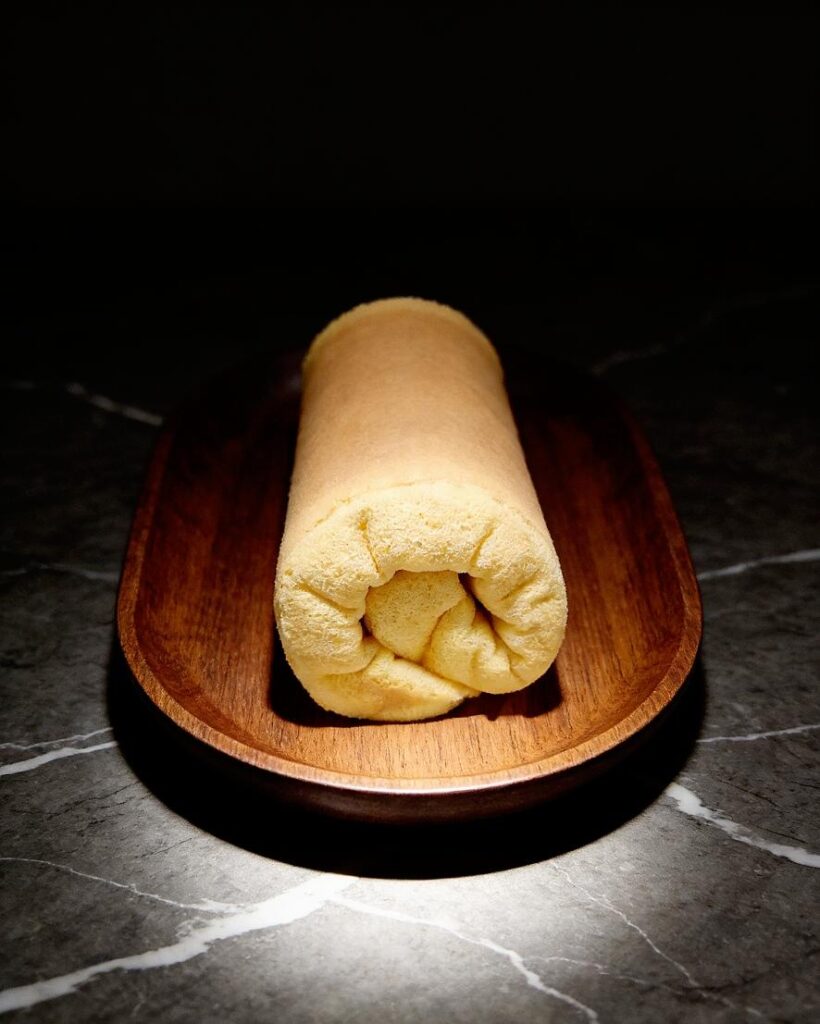
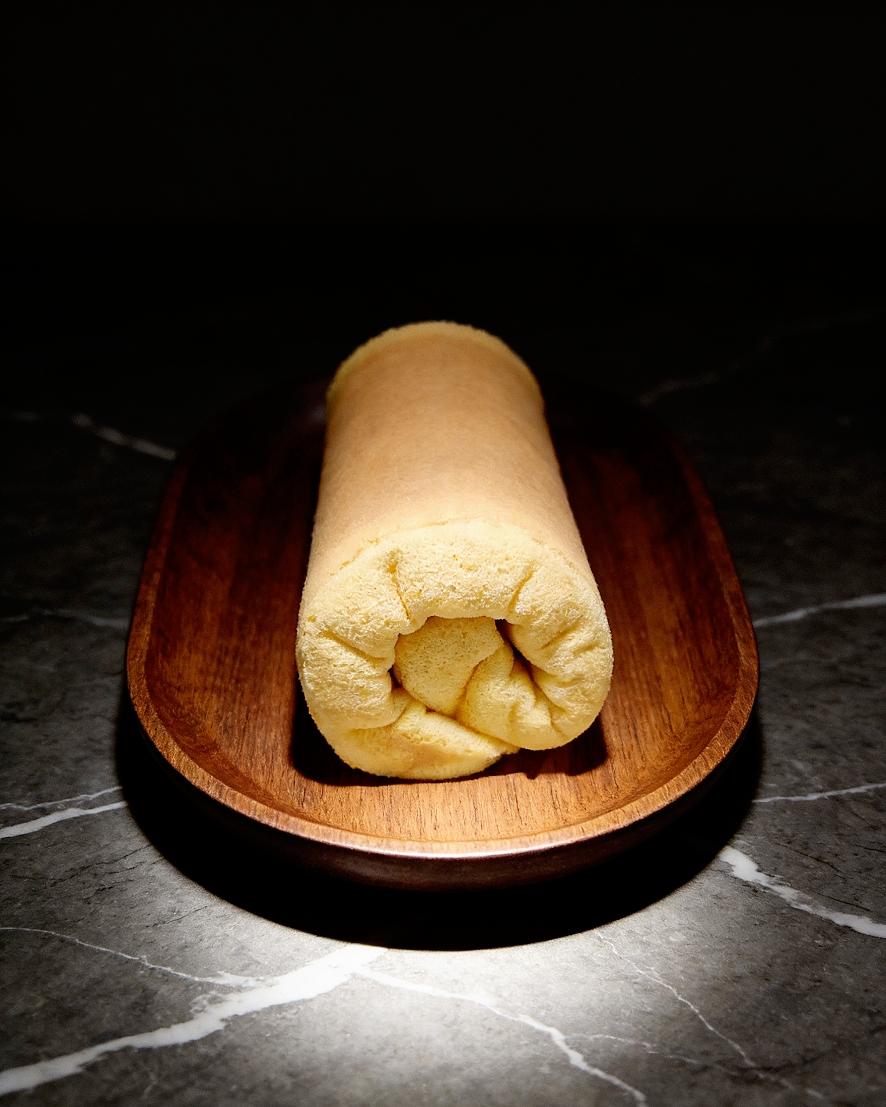
Original flavor cake roll, with a delicate and soft texture, full of rich egg aroma and milky fragrance. The cake body is made with avocado oil, pure milk, and Meimei low-gluten flour, yielding a soft and fluffy texture. Avocado oil gives the cake a unique aroma, while milk adds a moist mouthfeel. Whipping the egg whites is key: add white vinegar and white granulated sugar, whip at high speed then switch to low speed until stiff small eagle-beak peaks form, ensuring the cake’s fluffiness.
Fold the egg yolk batter and meringue together evenly to avoid bulging. During baking, adjust the temperature according to your oven; the baked cake comes out full with no shrinkage. After removing from the oven, tap lightly to release air; once cooled, it presents a beautiful towel surface. It can be rolled directly or filled with cream, and tastes best after being sealed and refrigerated. It is a classic and delicious dessert.▪️Small eggs in shell 54 g × 6▪️Large eggs in shell 66 g × 5 140/130℃ 25 minutes + 150/150℃ 7 minutes⬇️Use large eggs over 60 g (28*28 baking pan)
Egg Yolk Batter
5%)
65 g Egg yolk (after shelling) 109 g (5-6 eggs depending on egg size) Meringue Egg white (after shelling) 200 g (5-6 eggs depending on egg size) White vinegar (Hengshun 6 degrees) 5.6 gWhite granulated sugar (Member’s Mark refined) 50 g
Add 40 g avocado oil to 55 g whole milk. Mix evenly with a whisk until a yogurt-like texture is achieved, with no oil droplets. Add 65 g cake flour. Mix evenly with a whisk. Add 109.3 g egg yolks. Mix evenly with a whisk until smooth and free of lumps; when lifted, the batter should drop quickly. Specific state of the egg yolk batter. Refrigerated egg whites for later use 199.6 g. Add 50 g white granulated sugar and 5.6 g white vinegar.Whip at high speed until streaks appear, then consolidate the interior with a silicone spatula (rapid expansion).
Continue whipping at low speed until stiff peaks form. After turning off the mixer, rotate the beaters manually for two turns. When lifting the beaters, a small eagle-beak shape should form; the meringue must not be too soft or droop from side to side (fine, smooth meringue texture).
The state of the meringue in the bowl after lifting.
Turn the mixer on again and shake off excess meringue from the beaters; the final meringue texture should be glossy.
Stir the egg yolk batter first, then take one-third of the meringue and add it to the egg yolk batter.
The bowl after removing the meringue should show that the remaining meringue has not collapsed and was taken out as a whole piece.
Mix evenly with a whisk; a successfully made meringue does not need to be worried about deflating.
Take another one-third of the meringue.
Mix evenly with a whisk; circular stirring is acceptable without deflating.
In the meringue bowl, take the remaining meringue and first stir it with a whisk or silicone spatula until evenly mixed and uniform in texture.
Then pour the egg yolk batter back into the meringue bowl.
Mix evenly with a whisk; circular stirring is acceptable without deflating the foam.
Use a silicone spatula to scrape down the inner walls and bottom of the bowl, mixing evenly; circular stirring is acceptable without deflating the foam. It is essential to achieve complete mixing; if some meringue remains unmixed, the cake will develop bulges.
The batter should remain light and soft, so there is no need to worry about deflation. Deflation occurs when the meringue has not been whipped to the proper stage.
Pour the batter into a 28×28 baking pan lined with parchment paper.
Use the tip of a silicone spatula to push the batter into the four corners, then repeatedly tap the bottom of the pan from all sides to help the batter spread evenly.
Place in the oven. For the third rack from the top: 1) For the Hauswirt i7 with San Neng baking pan deluxe set, use upper and lower heat at 150°C for 32 minutes. 2) For the most common inexpensive home ovens, baking in stages is most reliable: Changdi CRTF42W home electric oven at 140°C upper and 130°C lower for 25 minutes, then switch to 150°C upper and 130°C lower for 8 minutes (the last 5 minutes can use fan mode to help prevent the surface from peeling). Note: Some ovens with a bottom heat exceeding 130°C will cause bulging. The starting oven temperature should not be too high; anywhere between 120-150°C is acceptable, but too high is not; adjust according to your own oven.
State after 10 minutes in the oven (Changdi CRTF42W household electric oven). It is not recommended that the batter begin to expand during the first 10 minutes of baking. If it expands significantly within 10 minutes, the temperature is too high and the cake structure lacks sufficient support, which will lead to shrinkage after release. Expansion should occur during the 15-20 minute period after baking begins.
State after 20 minutes in the oven (Changdi CRTF42W household electric oven). At this point the pan is full, giving a lovely plump appearance. After release, gently tap the baking pan to help expel air; a very full state can be observed. If the room temperature is too cold or too humid after release, the state will be affected. It is recommended to place the cake in a warm room. After 5 minutes, remove the cake, lift the oilcloth, tear off the edges on all sides, and let it cool at room temperature until warm. Once warm, tear off the oilcloth at the bottom and the towel surface will be revealed. If an oily skin appears, it means the milk and avocado oil were not fully emulsified and the baking time was too long (the color here is too dark, indicating the oven temperature was still slightly high). Use a rolling pin and oil paper to roll it up; cream filling may also be added. It must be sealed and refrigerated; placing it directly in the refrigerator will make it hard.After cooling, cut into pieces using a sharp, high-quality knife.
⚠️ Compiling these records is no easy task, and the recipes are shared free of charge. Please show understanding. Any questions are welcome for discussion. Be a positive person; there is no need to leave a low rating over minor issues. 🙏 Baking, cooking, and pastry making are all like exploring treasure. The original formula is like a reliable map left after multiple tests. When beginners explore by following the map, it is easier to dig up “delicious treasure.” Once success is achieved, there will be plenty of time to exercise creativity. Modifying ingredients, proportions, or steps right from the start easily leads to failure.